


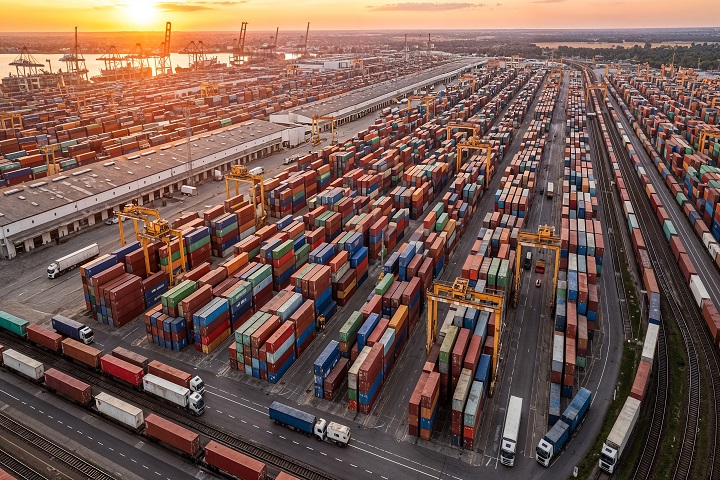
Oakland continues to earn its reputation as a logistics stronghold on the West Coast. The city does not rely on scale alone. Its real strength lies in how efficiently different transport modes connect and cooperate. In this environment, Intermodal in Oakland has emerged as a reliable solution for businesses that demand speed, control, and consistency without unnecessary complexity.
Intermodal in Oakland as a Strategic Logistics Advantage
At its core, intermodal logistics is about intelligent coordination. Cargo moves using more than one mode of transport, most commonly rail and truck, while remaining within a single, uninterrupted shipment flow. Oakland’s infrastructure makes this approach remarkably effective.
Port terminals sit close to major rail facilities, limiting excess handling and reducing dwell time. Containers are transferred smoothly from vessel to rail, then distributed inland through an extensive ground network. This physical proximity minimizes friction and supports steady cargo velocity. As a result, Intermodal in Oakland is not just operationally viable, it is strategically efficient.
Why Oakland Fits Intermodal So Naturally
Geography plays a decisive role in logistics success. Oakland benefits from direct Pacific access, strong rail corridors, and highway routes that connect quickly to regional and national markets. These elements form a tightly woven logistics fabric rather than a collection of disconnected assets.
This integration allows Intermodal in Oakland to function with fewer delays and more predictable timelines. Cargo transitions are planned, not improvised. Schedules are aligned instead of reactive. For shippers, this translates into confidence, a quality that has become increasingly valuable in uncertain market conditions.
A Balanced Approach to Cost and Performance
Transportation costs rarely remain stable. Fuel prices fluctuate, labor availability shifts, and capacity constraints appear with little warning. Intermodal logistics helps smooth these variables by combining the cost efficiency of rail with the flexibility of trucking.
Rail absorbs the long-haul distance where fuel efficiency matters most. Trucks manage the final miles where precision and timing are critical. In Oakland, this balance is especially effective due to short drayage distances and reliable rail access. Intermodal in Oakland allows businesses to control expenses without compromising service quality.
Supporting Sustainable Freight Movement
Environmental responsibility is no longer optional. It has become an expectation from customers, regulators, and supply chain partners alike. Intermodal transportation supports sustainability goals by reducing reliance on long-haul trucking.
Rail produces fewer emissions per ton-mile and consumes fuel more efficiently over long distances. By shifting a portion of freight movement to rail, Intermodal in Oakland lowers environmental impact while maintaining dependable transit performance. This approach aligns operational efficiency with responsible freight practices.
Technology Strengthening Intermodal Operations
Modern logistics depends on visibility. Oakland’s intermodal ecosystem increasingly relies on digital systems that provide real-time insight into cargo movement. Tracking platforms, predictive scheduling, and performance analytics improve coordination across modes.
These tools turn Intermodal in Oakland into a transparent process rather than a logistical blind spot. Potential disruptions are identified early. Adjustments are made proactively. This level of awareness reduces risk and supports smoother decision-making across the supply chain.
Resilience in an Unpredictable Supply Chain Environment
Recent years have shown how vulnerable single-mode transportation can be. Intermodal logistics offers built-in resilience by allowing cargo to shift between modes when conditions change. Oakland’s diversified infrastructure supports this flexibility.
If highway congestion increases or capacity tightens, rail options remain available. If schedules require adjustment, alternative routing can be planned without restarting the entire shipment process. Intermodal in Oakland helps businesses remain operational even when conditions become challenging.
The Value of Experience and Local Knowledge
Intermodal success depends on more than infrastructure and technology. It requires informed coordination and an understanding of local operating conditions. Timing, terminal operations, compliance, and equipment availability all influence outcomes.
Port Z Logistics applies this local expertise to ensure intermodal strategies are executed with precision. By aligning shipment planning with Oakland’s logistical realities, the company helps clients realize the full benefits of Intermodal in Oakland without unnecessary risk or delay.
Expanding Role in Regional and National Distribution
As supply chains continue to evolve, Oakland’s role in freight movement is expanding. Inland markets require faster replenishment. Distribution networks demand consistency across long distances. Intermodal solutions support both needs.
Intermodal in Oakland serves a wide range of industries, from retail and manufacturing to agriculture and technology. Its ability to handle volume, manage cost, and maintain reliability makes it suitable for both regional distribution and long-haul inland transport.
Looking Ahead
Investment in port modernization, rail efficiency, and logistics technology continues to strengthen Oakland’s intermodal capabilities. These developments ensure the city remains relevant as freight demands grow more complex and sustainability expectations increase.
Rather than reacting to disruption, Intermodal in Oakland offers a forward-looking logistics framework built for adaptability and endurance.
Final Perspective
Intermodal in Oakland represents a practical, resilient approach to modern freight movement. It blends infrastructure, efficiency, and experience into a system designed to perform under pressure. For businesses seeking stability in an unpredictable logistics environment, Oakland provides a dependable platform where intermodal strategies deliver real, measurable value.