


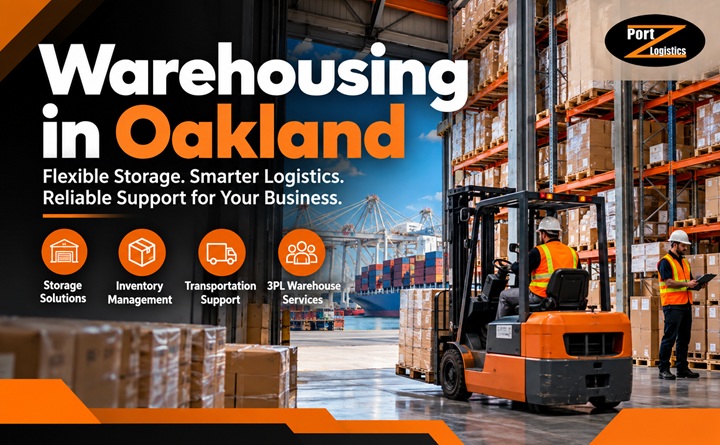
A warehouse sounds simple until your inventory starts growing, shipments arrive at different times, and customers expect their orders to move without delays. Suddenly, finding enough space is only one part of the problem. You also need to know where everything is, when it arrived, how long it will stay, and what happens when it is ready to move again.
That is where Warehousing in Oakland can make a real difference. For businesses dealing with port cargo, imports, exports, distribution, or changing inventory levels, having the right warehouse nearby can take a lot of pressure off daily operations.
It is not always about finding the biggest warehouse. The better question is whether the storage setup actually fits the way your business moves freight.
Why Warehousing in Oakland Matters for Local Businesses
Oakland has a strong connection with freight movement, which makes warehouse location an important consideration for businesses handling cargo in the area.
Imagine a shipment arriving at the port, but the customer is not ready to receive it yet. Sending the cargo somewhere without a proper storage plan can create extra handling, extra transportation, and unnecessary coordination.
A nearby warehouse gives you another option. The cargo can move into storage while you work out the next step.
This becomes even more useful when a business handles several shipments at once. Instead of treating every delivery as an emergency, the company can organize inventory and move it according to actual demand.
What Makes Warehousing in Oakland Useful for Freight Storage?
Storage is only useful when it fits into the rest of the supply chain.
For example, a company may receive products in large quantities but sell them gradually. Keeping everything at the same location can make sense until the inventory starts taking up too much space. A warehouse gives the company somewhere to hold that stock without interfering with everyday operations.
The same applies to imported cargo. A shipment might arrive before the final delivery schedule is confirmed. Rather than rushing the cargo to its destination, the business can store it and arrange transportation when the timing works.
That extra flexibility can be valuable, particularly when shipment schedules change.
How Warehouse Logistics in Oakland Can Keep Cargo Moving
Good warehouse logistics in Oakland is not simply about putting freight inside a building.
Someone has to receive the cargo, check it, place it in the right area, keep track of it, and prepare it when it needs to leave. If these steps are not organized, even a large warehouse can become difficult to manage.
Consider a business with several incoming shipments. If workers cannot quickly identify which inventory belongs to which order, the problem eventually reaches transportation and customers.
A sensible warehouse process avoids that situation. Inventory stays organized, incoming and outgoing shipments remain easier to track, and the business has a clearer idea of what it has available.
The goal is straightforward: know what you have, know where it is, and know when it needs to move.
When Do Businesses Need More Storage Space?
There is no single point at which every business suddenly needs a warehouse. For some, the need appears during a period of growth. For others, it happens because a large shipment arrives or seasonal demand increases.
A business might also need additional space after expanding its product range.
Trying to squeeze extra inventory into an existing location usually creates problems. Walkways become crowded, products become harder to find, and employees spend more time moving things around.
Additional warehouse space gives the business room to work.
It also means you do not necessarily have to expand your own facility just because your inventory has temporarily increased.
How 3PL Warehouse Services Can Make Things Easier
Many businesses do not want to build and manage a warehouse from scratch. They simply need dependable storage and someone who understands how freight should move through the facility.
That is where 3PL Warehouse Services come into the picture.
A third-party logistics provider can handle warehouse-related activities while the business focuses on sales, customers, purchasing, and other priorities. Depending on the arrangement, this may include receiving shipments, storing inventory, handling cargo, preparing outgoing freight, and coordinating transportation.
For a growing business, this can be much more practical than taking on an entire warehouse operation alone.
It can also help a company respond to changes without making a long-term commitment to more space than it actually needs.
Where 3PL WAREHOUSING SERVICES Fit Into the Supply Chain
3PL WAREHOUSING SERVICES can be useful when storage is only one part of a larger logistics requirement.
Take an importer as an example. The shipment arrives, needs temporary storage, and eventually has to move to another location. If the warehouse and transportation sides work separately, the business may spend a lot of time coordinating between different steps.
A connected logistics approach can make that process simpler.
The warehouse receives the cargo, keeps it organized, and prepares it for its next move. Transportation can then be planned around the actual shipment schedule instead of guessing when the inventory will be ready.
This kind of coordination becomes especially helpful when a company handles freight regularly.
Can Warehousing in Oakland Help With Import and Export Shipments?
Yes, and this is one of the reasons warehouse location matters so much.
Import and export cargo does not always move directly from one point to another. There can be timing gaps between port arrival, storage, transportation, customer requirements, and final delivery.
A warehouse can act as a practical middle point.
Cargo can arrive, remain secure while the next step gets arranged, and move when the transportation schedule is ready. For businesses handling frequent freight, this can make planning considerably easier.
The warehouse also gives businesses more control over inventory instead of forcing every shipment to move immediately.
What About Seasonal or Temporary Inventory?
This is another situation where flexible storage can be useful.
A business may have a quiet period for several months and then suddenly receive a much larger volume of inventory. Paying for permanent space based on the busiest month may not always make financial sense.
Temporary or flexible warehouse capacity can help bridge that gap.
The business gets room when it needs it and can adjust its storage plan as inventory levels change. This is particularly useful for companies that experience fluctuations rather than maintaining the same stock volume throughout the year.
How Storage and Transportation Work Together
One mistake businesses sometimes make is looking at warehousing and transportation as two completely separate services.
In reality, they are closely connected.
A shipment enters the warehouse because it needs somewhere to go before its next move. Later, it leaves the warehouse because transportation has been arranged. If the two sides do not communicate, delays can happen.
For example, cargo might be ready to leave but the pickup schedule may not match. Or a truck could arrive before the warehouse has finished preparing the shipment.
Good planning keeps these activities connected.
Port Z Logistics supports warehousing along with transportation and transloading, giving businesses a way to coordinate different parts of their freight movement rather than managing every step separately.
Choosing the Right Warehousing in Oakland
The cheapest storage option is not automatically the right one.
Before choosing a warehouse, think about the type of cargo you handle, the amount of space you need, how frequently inventory moves, and how close the warehouse should be to your transportation routes.
Then look beyond storage itself.
Ask how the warehouse handles incoming freight. Find out how inventory gets organized and how outgoing shipments are prepared. If you need transportation or transloading too, consider whether those services can fit into the same logistics plan.
Location matters, but so does the way the warehouse fits into your everyday operation.
How Port Z Logistics Supports Warehousing in Oakland
Port Z Logistics provides warehousing and freight support for businesses that need storage as part of their wider logistics operation.
Its warehouse covers more than 50,000 square feet and sits within six miles of the Port of Oakland. That location can be useful for businesses handling port-related freight that needs storage, transportation, or transloading.
Every business has different storage requirements. Some need space for incoming cargo, while others need a place to hold inventory until customer orders or transportation schedules are ready.
Port Z Logistics can help businesses bring these requirements together instead of treating storage as an isolated part of the supply chain.
Final Thoughts
Warehouse space becomes valuable when it helps a business work better.
For one company, that might mean having somewhere to keep imported cargo until delivery is ready. For another, it could mean extra room during a busy season. Someone else may simply need dependable storage without taking on the responsibility of operating a warehouse themselves.
That is why Warehousing in Oakland should be viewed as more than a place to keep inventory. The right setup can connect storage with transportation, transloading, and everyday freight planning.
When those pieces work together, businesses have more room to manage changes and keep cargo moving without turning every shipment into a last-minute problem.
Frequently Asked Questions
Businesses use warehousing for storing inventory, receiving cargo, organizing shipments, and holding freight until transportation or delivery is ready.
3PL Warehouse Services provide businesses with third-party support for activities such as receiving, storage, inventory handling, and shipment preparation.
They can be. A small or growing business may benefit from using outside warehouse support instead of investing in its own facility and warehouse operation.
Yes. A warehouse can hold imported cargo after arrival and keep it organized until the business is ready for the next transportation or delivery step.
Yes. Port Z Logistics provides warehousing along with transportation and transloading support for businesses with different freight and storage requirements.